Scale & Sip: insights from our first SaaS event in Spain
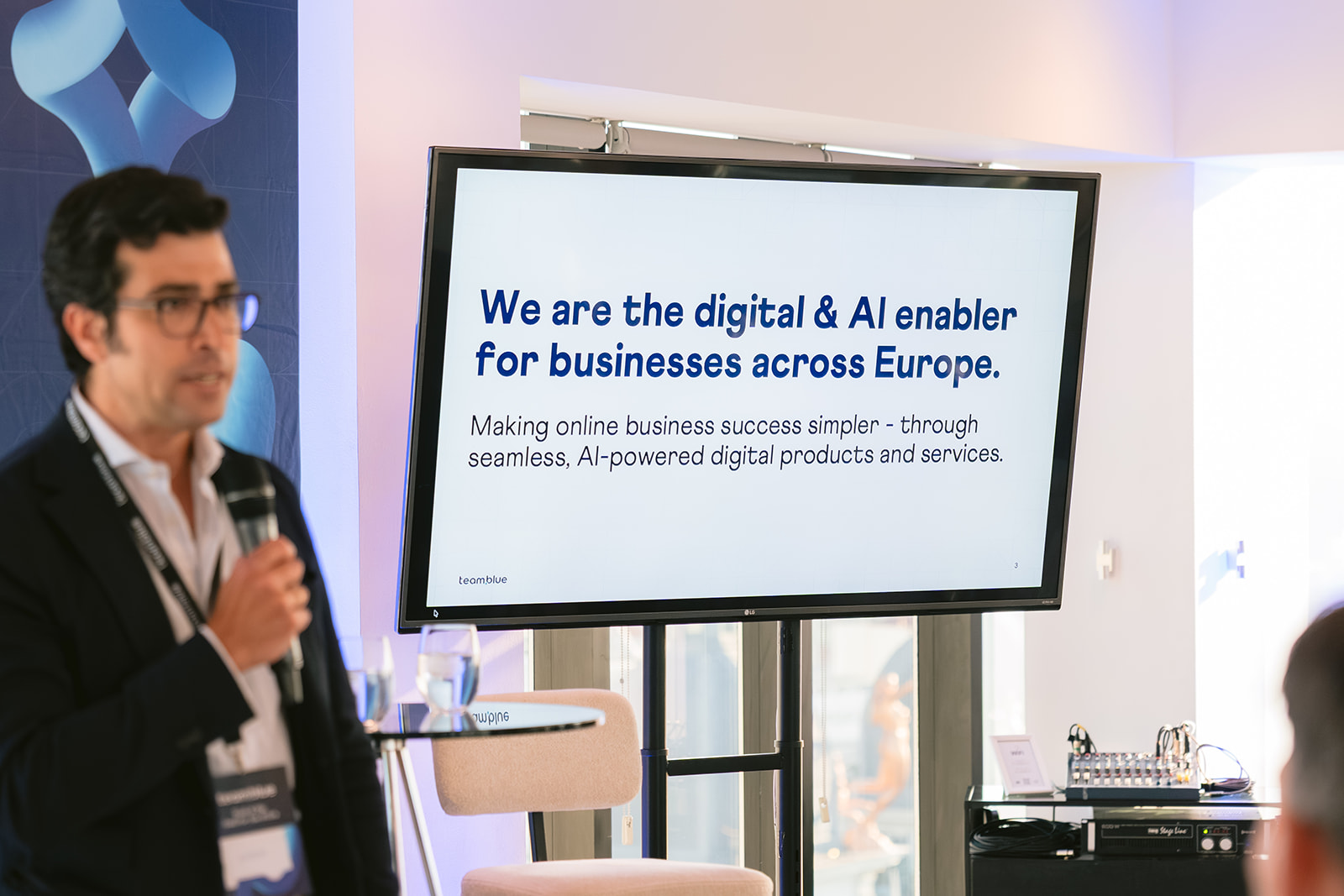
On a warm May evening in Madrid, founders, investors and executives came together to discuss how to build SaaS for the AI era.
Scale & Sip was team.blue and Metricool's first invite-only event for the Spanish SaaS community: two roundtables, no slides, no pitches. Just honest conversations about what it takes to scale a software company.
Here is what we took away.
- There is no universal growth playbook: outbound, product-led or a mix, what matters is fit with your product, customer and market.
- Revisit pricing more often than feels comfortable; decisions made at €1M ARR rarely survive unchanged to €10M.
- Hiring is one of the hardest transitions: promoting from within tends to bring fewer regrets than external hires.
- When to sell or stay should be driven by what is right for the company, not a revenue milestone or outside pressure.
- In regulated markets, compliance is both an advantage and a constraint and works best treated as a product decision from day one.
- AI delivers most when tightly scoped and well-monitored; open-ended, it tends to fail.
Breaking the €10M ARR ceiling
Moderated by Juan Pablo Tejela (Metricool), with Laura Montells (Metricool), Juanjo Traver (Declarando) and Iván Navas (DooFinder).
The first roundtable opened with a question about acquisition models and quickly became a debate about what growth looks like from the inside.
There is no universal playbook. Some companies build aggressive outbound sales teams from day one. Others grow almost entirely through organic, product-led channels. Most end up somewhere in between, and working out which approach fits your product, your customer and your market takes longer than anyone expects.
On pricing, the group was largely in agreement: revisit it more often than feels comfortable. Pricing decisions made at €1M ARR rarely survive unchanged to €10M. The customer profile shifts, the competitive landscape changes, and what felt like the right plan structure often turns out to be holding growth back. Several founders described resisting pricing changes for years, then being surprised by the results when they finally made them. Assumptions about what customers will or will not accept are usually wrong until you test them.
Hiring came up as one of the hardest transitions a founder faces, and one that tends to arrive right in the middle of a growth phase, when there is the least time to get it wrong. The group debated internal promotion versus external hiring at length. Those who promoted from within generally had fewer regrets. As one founder put it: "It is easier to train someone internal in a new skill than to train someone external in your culture."
On when to sell or stay, no formula emerged, and the group was sceptical of anyone who claimed to have one. What came through was a shared sense that the decision should be driven by what is right for the company: whether it needs different leadership, a larger platform, or simply a partner to grow with. Not a revenue milestone. Not external pressure.
Scaling in regulated markets
Moderated by Borja Salgado, M&A Director at team.blue, with Oriol Bausà (B2Brouter), Enrique García (TaxDown) and Antonio Melé (Orbio AI).
The second roundtable brought together three companies where compliance is not optional. The question on the table: is regulation a competitive advantage or a long-term constraint?
From all three founders, the answer was: both. Regulation raises the bar for new entrants and builds real switching costs. But it also slows you down, creates dependencies on timelines outside your control, and requires heavy investment before you have the revenue to justify it. The founders who have made it work treated compliance as a product decision from day one, not a legal checkbox.
On expanding to new markets, a regulated product travels differently from a horizontal SaaS tool. The product can often be adapted faster than the go-to-market. Distribution, brand trust, and even how you frame the problem must be rebuilt almost from scratch in each new country. One founder described arriving in a new market and realising that the value proposition that had worked at home simply did not land — not because the product was wrong, but because the customer's relationship with the underlying problem was completely different.
On AI, all three founders are actively building it into their products, but none described it as a transformation. In compliance-heavy environments the cost of a wrong output is high — a misfiled tax return, an incorrect invoice, a candidate conversation that goes off-script. Several founders described spending years developing the internal testing and guardrails needed before they felt confident releasing AI-driven features to real users. The broader point, which applies well beyond regulated industries: AI works best when the problem is well-defined and the scope is narrow. Tightly scoped, properly monitored, it can deliver real value. Open-ended, it tends to fail.
team.blue partners with visionary founders to help them scale across Europe. Learn more more about our growth network here: https://team.blue/founders/